

Legal Actions Against Social Media Companies and the Fight to Democratize News
- lhof39
- Aug 23
- 8 min read
The fight over social media is often framed as a battle against “fake news”. That phrase sounds simple, but it hides a larger shift: news no longer belongs only to television networks, national newspapers, and large media companies. A person with a phone, a small website, a podcast, or a video channel can now reach readers directly at a very low cost.
That change has unsettled governments, legacy media, courts, regulators, and the platforms themselves. Legal actions against social media companies now sit at the centre of a much bigger argument about speech, privacy, competition, public safety, and who gets to decide what counts as truth.
The hard part is that both sides have real concerns. False claims can spread quickly and cause harm. At the same time, heavy-handed control can crush small publishers, independent reporters, and ordinary citizens who challenge the official line. A healthy democracy needs room for disagreement, not just approved speech from large institutions.
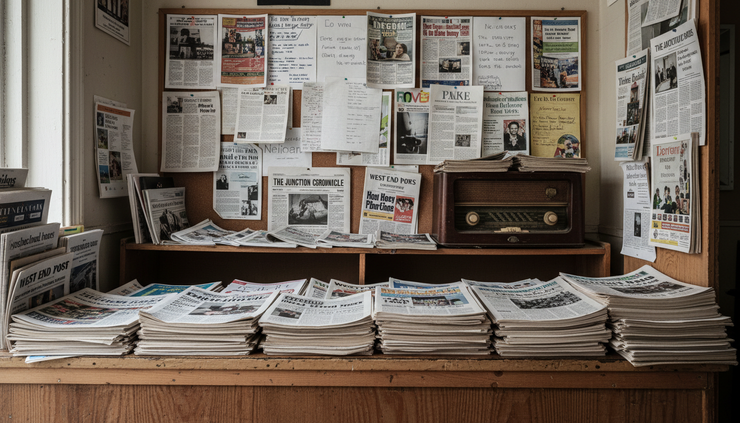
Legal action has become the main tool for controlling platform power
Social media companies are no longer treated as neutral technology firms that merely host posts. Courts and regulators now see them as powerful public gatekeepers. They shape what people read, what disappears, which publishers earn money, and which voices get amplified.
Legal action against these companies usually falls into several broad areas.
Privacy and data protection
Regulators have challenged platforms over how they collect, store, share, and monetise user data. The European Union’s General Data Protection Regulation remains one of the best-known examples of a legal framework built around consent, transparency, and data rights. Other regions have followed with their own privacy laws, though standards vary widely.
Competition and market dominance
Large platforms control attention, advertising markets, app ecosystems, and access to audiences. Competition authorities have looked at whether these companies make it unfairly hard for smaller rivals to grow. The concern is not only price, since many services are “free” to use. The deeper issue is control over distribution.
Content moderation and harmful material
Governments have put pressure on platforms to remove illegal or harmful content faster. Laws such as the EU Digital Services Act and the UK Online Safety Act reflect the view that major platforms must take more responsibility for what spreads through their systems.
Children and young users
Legal claims and investigations have raised questions about design choices that may keep young people scrolling, expose them to harmful material, or collect too much personal data. This area is likely to keep growing because it connects technology, health, consumer protection, and parental concern.
Political speech and censorship
This is the most difficult area. A platform that removes posts too aggressively can look like a censor. A platform that refuses to remove anything can become a megaphone for scams, harassment, and dangerous rumours. Lawmakers often say they want balance, but laws written in broad language can push platforms to remove more than necessary.
The result is a legal maze. Some lawsuits accuse platforms of doing too little. Others accuse them of doing too much. That contradiction shows how much power society has handed to a small number of private companies.
The “fake news” label can protect consumers or protect old power
False information is real. Fake medical cures, election lies, financial scams, impersonation, and fabricated images can cause serious damage. No serious debate should pretend all content is harmless.
Yet the phrase “fake news” has also become a political weapon. It can mean “this is false”, but it can also mean “this challenges the people who used to control the story”.
That distinction matters.
For most of the twentieth century, mass news was expensive. Printing presses, broadcast licences, distribution networks, studios, reporters, editors, and lawyers cost a lot of money. Those costs gave established media organisations real power. They could investigate wrongdoing, but they could also ignore stories that did not fit their worldview or commercial interests.
Social media changed the cost structure. A small operation can publish with little more than a phone, a low-cost camera, basic editing tools, and an internet connection. A local resident can document flooding, police conduct, housing problems, unsafe buildings, or price rises before any major newsroom arrives.
That is the democratisation of news. It moves information away from a small circle of large corporate media outlets and towards more voices, more formats, and more local knowledge.
This is good for consumers in several ways:
More sources make it harder for one institution to set the whole agenda.
Small publishers can cover local issues that large outlets ignore.
Independent journalists can build direct relationships with readers.
Low operating costs allow niche reporting that would not survive inside a large media company.
Readers can compare claims instead of relying on one approved source.
The danger comes when governments or platforms use the fight against fake news to narrow the range of acceptable opinion. If only large approved organisations are treated as trustworthy, the old gatekeeping system returns under a new name.
The better answer is not to silence small voices by default. The better answer is to demand evidence, label paid influence clearly, punish fraud, and teach readers how to compare sources.

Small media operations need freedom and responsibility
Low-cost publishing is one of the best things the internet has given consumers. It lets small operators enter a field once guarded by money, credentials, and access. That does not mean every small publisher is honest or careful. It means the barrier to entry is lower, and that is valuable.
A small news operation can work in ways that corporate media often cannot. It can focus on one neighbourhood, one industry, one court case, one public body, or one neglected community. It can publish without waiting for a broadcast schedule or print deadline. It can survive on subscriptions, donations, small ads, events, or volunteer support.
This competition can improve the whole media system. Large newsrooms have to work harder when citizens can check them, challenge them, and publish alternative evidence. Officials have to answer questions from more than a few familiar reporters. Corporate mistakes can be exposed by people outside corporate media.
Yet freedom without standards can damage trust. Small publishers should not be exempt from basic duties. They should correct mistakes, separate opinion from reporting, avoid manipulated evidence, and disclose conflicts when relevant. A free information market still needs reputational consequences.
The law should focus on clear harm rather than vague dislike. Fraud, defamation, stalking, threats, impersonation, and illegal data use are real legal issues. A controversial opinion, a mistaken prediction, or an unpopular political view should not be treated the same way.
There is a big difference between policing crimes and policing narratives.
If regulation punishes only dishonesty and harm, small operators can survive. If regulation demands expensive compliance systems, legal teams, and constant monitoring, then only the biggest players will cope. That would hurt consumers because it would remove the very competition that made the internet useful.
This is where many proposed rules become risky. A law that sounds fair on paper can produce unfair results in practice. Large platforms may respond by blocking smaller publishers, limiting political content, or relying on automated filters that cannot understand context. Small news sites may avoid sensitive topics because legal risk feels too high.
A good legal framework should protect speech, protect privacy, and protect consumers without making independent publishing impossible.
The privacy hypocrisy cannot be ignored
Social media companies collect too much data. They track behaviour, location, interests, contacts, messages, purchases, and browsing habits in ways many users do not fully understand. The business model rewards attention and prediction. The more a platform knows, the better it can target content and advertising.
That deserves legal scrutiny.
Still, there is a serious hypocrisy when governments condemn platform data gathering while expanding their own power to monitor citizens. Public authorities often justify wider data access through tax enforcement, anti-money-laundering rules, national security, fraud prevention, or financial regulation. Some of those goals are legitimate. Crime exists. Corruption exists. Terror financing exists.
But constant financial monitoring can become a tool of control.
Bank account surveillance is especially sensitive because money records reveal daily life. They show where people travel, what they read, which groups they support, which doctors they visit, which causes they donate to, and who they meet. Financial data can expose a person as clearly as a diary.
When governments gain broad access to bank information, the public is asked to trust that power will always be used properly. History gives little comfort on that point. Authoritarian rulers such as Hitler and Stalin did not possess modern digital banking systems, real-time payment trails, facial recognition, and mass data storage. They would have prized those tools. The fact that modern states can collect and search data at scale should make free societies more cautious, not less.
The same principle should apply to both companies and governments: collect less, justify access, limit use, and allow challenge.
A private company should not build secret profiles without meaningful consent. A government should not monitor citizens’ financial lives without strong legal safeguards, clear limits, independent oversight, and due process.
Calling out platform surveillance is not enough. Citizens should also question state surveillance. Privacy rights do not vanish because the collector has a public logo instead of a private one.

Better rules should protect both truth and freedom
The central challenge is not whether social media companies should face legal limits. They should. No private platform should be above the law, especially when it profits from personal data and controls access to public debate.
The real question is what kind of limits serve the public.
Bad rules can make the internet less free and less competitive. Good rules can make it more honest, more open, and less abusive.
A balanced approach would include several principles.
Transparency from platforms
Platforms should explain major moderation policies in plain language. Users should know why posts are removed, downranked, labelled, or demonetised. They should also have a fair appeal process.
Equal treatment for small publishers
Regulation should not create compliance costs that only large media companies can survive. If legal rules force every small operator to act like a multinational broadcaster, democracy loses voices.
Clear rules against real harm
Fraud, impersonation, incitement to violence, child exploitation, and targeted harassment should face firm action. These are not mere disagreements. They damage real people.
Protection for lawful political speech
Democratic societies need space for harsh criticism, unpopular opinions, satire, whistleblowing, and debate over official claims. Mistakes should be corrected, but lawful speech should not be crushed because it is inconvenient.
Privacy limits for both business and government
Rules should restrict unnecessary data collection by platforms and unnecessary data access by governments. Oversight should apply in both directions.
Media literacy instead of blind trust
Consumers should not be told to trust one class of approved speaker forever. They should learn to ask better questions. Who is the source? What evidence is provided? Has the claim been corrected? Is the outlet funded by someone with a stake in the story? Do other credible sources agree?
The old media system often asked the public to trust institutions. The new system asks the public to judge information more actively. That is harder, but it is also healthier when supported by education and transparency.
Legal reform should not be a path back to a small club of approved voices. It should create a fairer public square where large platforms cannot abuse power, small publishers can compete, and citizens can speak without fearing arbitrary punishment.

The takeaway
Legal actions against social media companies are not just technical disputes about apps and algorithms. They are fights over speech, privacy, competition, and power.
The call to stop fake news should not become a demand to return control to corporate media or government-approved voices. False information should be challenged with evidence, legal remedies for real harm, and transparent rules. But the wider move towards low-cost, independent publishing is a gain for consumers. It gives more people the ability to report, question, document, and compete.
The same standard should apply to data. Social media companies should not be allowed to harvest private lives without restraint. Governments should not be allowed to build financial surveillance systems without strong checks. A free society must be wary of both corporate profiling and state control.
The best future is not a lawless internet. It is an open one, where truth is tested, power is limited, and news belongs to more than a few powerful institutions.


Comments